[Free Download] Goal Setting for Kids: Teaching Children How to Dream, Plan, and Achieve


As parents and educators, we want our children to grow into confident, capable, and responsible adults. One of the most valuable life skills we can teach them is how to set goals and work toward achieving them. Goal setting helps children develop direction, motivation, self-discipline, and resilience—skills that will benefit them throughout their lives.
That is why we created the Goal Setting for Kids Workbook, a practical and engaging resource designed to help children learn how to identify their dreams, create realistic plans, track their progress, and celebrate their accomplishments.
Why Goal Setting Matters for Children
Children naturally have dreams and interests. They may want to learn to ride a bike, improve their reading skills, save money for a special item, become better at sports, or learn a new hobby. However, many children do not automatically know how to turn those dreams into achievable goals.
Goal setting teaches children that success rarely happens overnight. It helps them understand that large accomplishments are often achieved through small, consistent actions taken over time. When children learn this lesson early, they begin to develop patience, perseverance, and a growth mindset.
Rather than feeling overwhelmed by a challenge, children learn to break tasks into smaller steps and focus on making steady progress.
What's Inside the Goal Setting for Kids Workbook?
This workbook guides children through the complete goal-setting process using age-appropriate activities, reflection pages, and planning tools.
Students will learn:
✔ What goals are and why they matter
✔ The difference between short-term and long-term goals
✔ How to identify personal strengths and interests
✔ How to create realistic and achievable goals
✔ How to break big goals into smaller action steps
✔ How to track progress and stay motivated
✔ How to overcome obstacles and setbacks
✔ How to celebrate accomplishments and learn from challenges
Throughout the workbook, children are encouraged to think critically about their choices, reflect on their growth, and develop confidence in their ability to achieve meaningful goals.

Building Confidence Through Success
One of the greatest benefits of goal setting is the confidence it builds. Every time a child completes a step toward a goal, they experience success. These small victories teach children that their efforts matter and that they are capable of accomplishing difficult tasks.
When children learn that progress comes through effort and persistence, they become more willing to try new things, take healthy risks, and face challenges with confidence.
Instead of saying, "I can't do it," they begin to say, "I can't do it yet."
Teaching Responsibility and Independence
Goal setting encourages children to take ownership of their learning and personal growth. Rather than relying entirely on parents or teachers to direct them, children begin to develop self-management skills.
As they create plans, track progress, and reflect on outcomes, they learn responsibility, accountability, and decision-making. These are essential life skills that support academic success, career readiness, financial responsibility, and personal development.
Learning to Overcome Obstacles
Every worthwhile goal comes with challenges. Children may become frustrated, lose motivation, make mistakes, or encounter setbacks along the way.
The Goal Setting for Kids Workbook helps children understand that obstacles are a normal part of growth. Instead of giving up, they learn problem-solving skills, perseverance, and resilience.
By learning how to adjust plans, seek support, and keep moving forward, children develop the mindset needed to succeed both inside and outside the classroom.
Goal Setting Beyond Academics
While goal setting is often connected to school success, it can be applied to every area of life.
Children can use these skills to:
• Improve reading and math skills
• Learn a new instrument
• Develop healthier habits
• Save money
• Build stronger friendships
• Improve sports performance
• Learn household responsibilities
• Complete personal projects
• Develop leadership skills
• Strengthen character traits such as kindness, patience, and responsibility
Goal setting helps children understand that growth is possible in every area of life.
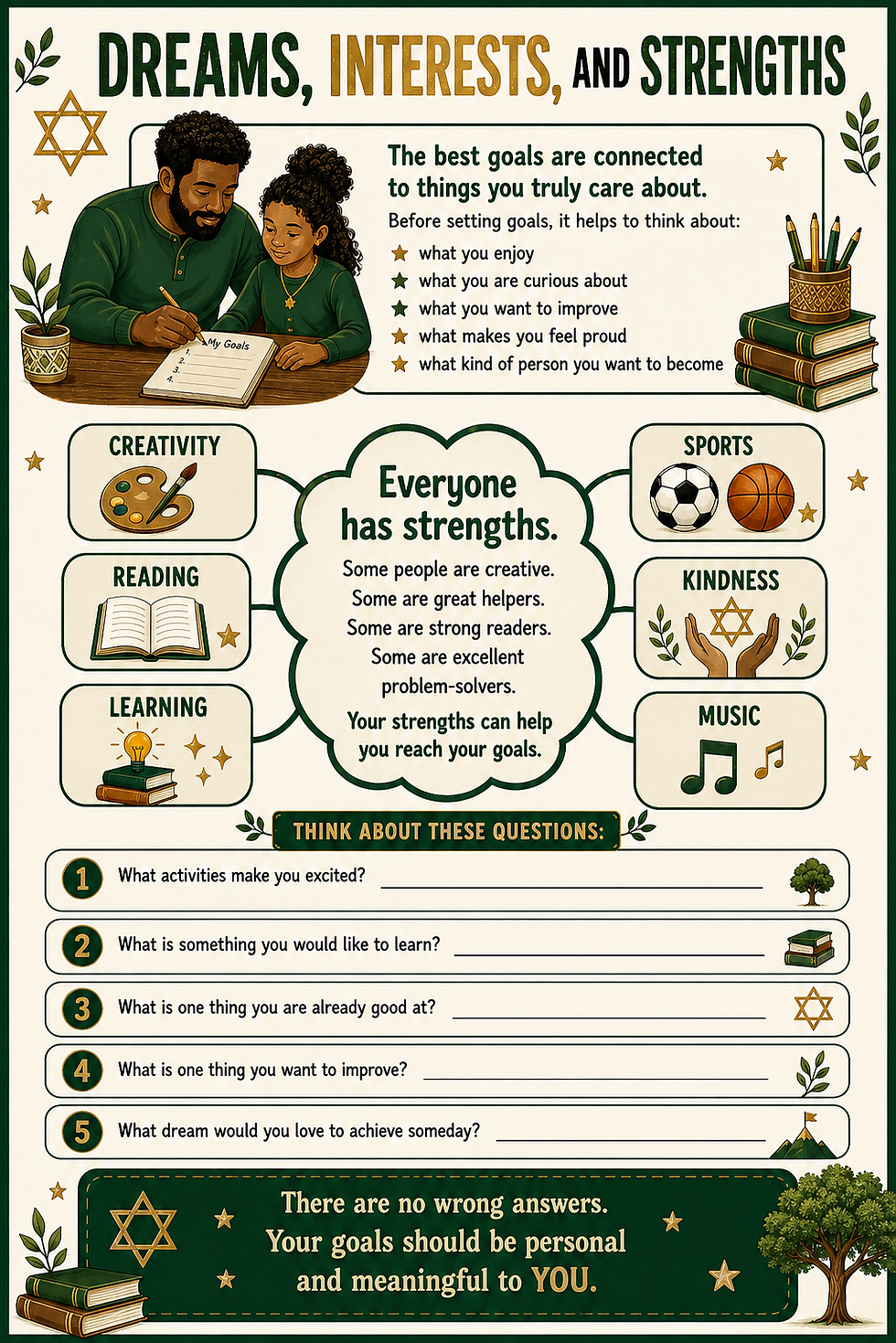
The Importance of Reflection
An important part of achieving goals is taking time to reflect. Reflection allows children to celebrate successes, identify areas for improvement, and recognize how much they have grown.
The workbook includes opportunities for students to think about what worked well, what challenges they faced, and what they would do differently next time. This reflection process helps build self-awareness and lifelong learning habits.
Working Together as Families
Parents play an important role in helping children achieve their goals. By discussing goals together, providing encouragement, and celebrating progress, families can create a supportive environment that motivates children to keep striving.
The Goal Setting for Kids Workbook provides excellent opportunities for meaningful conversations about dreams, responsibility, perseverance, and personal growth.
When families participate in the goal-setting process, children are more likely to stay motivated and experience success.
A Skill for Life
Goal setting is much more than a school activity—it is a lifelong skill. The ability to set meaningful goals, create a plan, stay motivated, and overcome challenges will benefit children throughout their education, careers, relationships, and personal lives.
Our Goal Setting for Kids Workbook helps children build these essential skills in a fun, engaging, and practical way. By learning how to dream big, plan wisely, and take action consistently, children develop the confidence and determination needed to achieve their goals and reach their full potential.
Because every great accomplishment begins with a goal.


Comments