[Free Download] How to Help a Struggling Reader at Home: Small Steps That Make Practice Easier

When your child finds reading difficult, it can be hard to know what to do next. Should you correct every mistake? Choose an easier book? Keep practising, even when your child is frustrated?
You want to help, but you also want reading time to feel calm and encouraging.
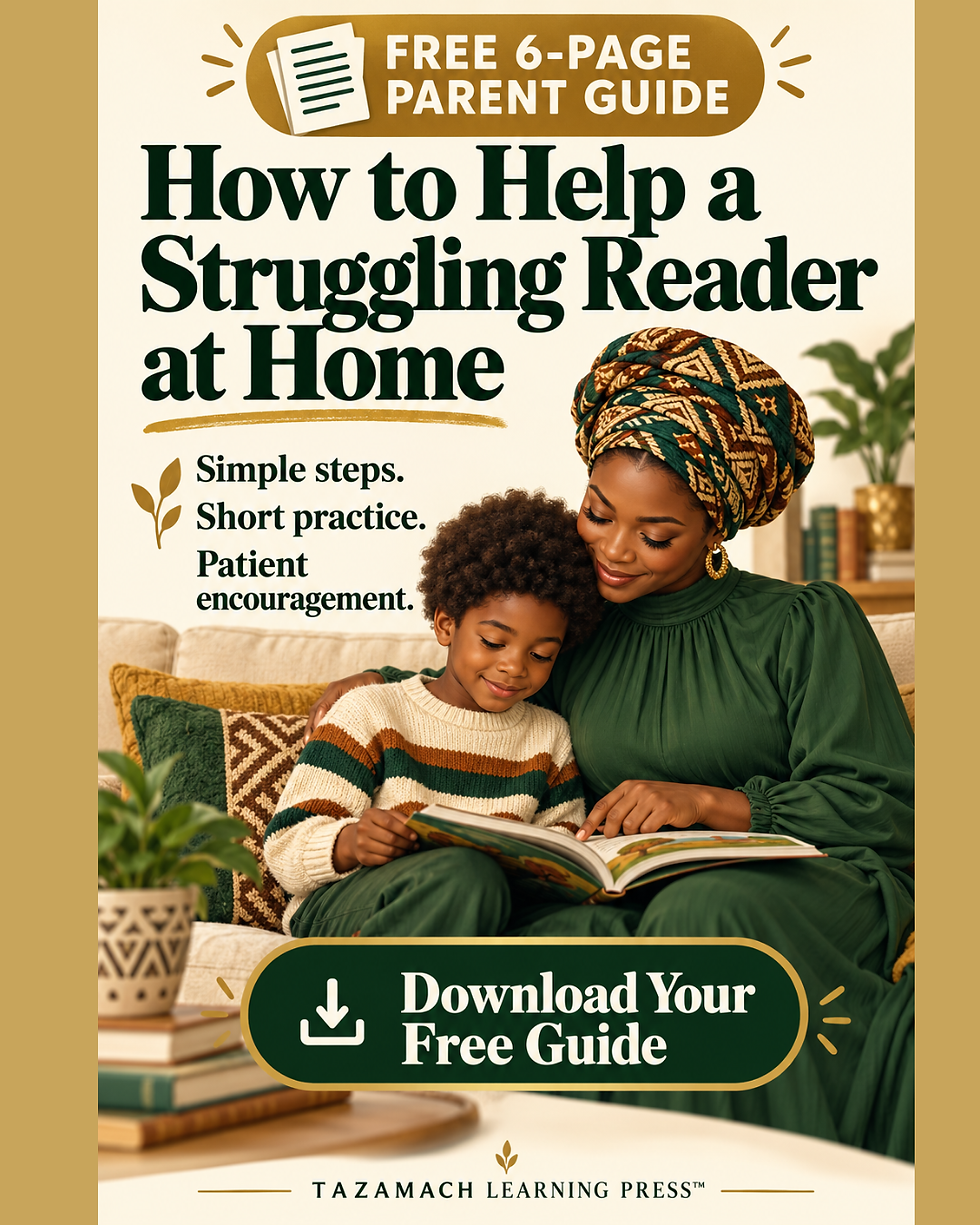
That is why Tazamach Learning Press™ created How to Help a Struggling Reader at Home, a free six-page parent guide with practical steps you can use during everyday reading practice.
You can begin with one small skill and a few minutes together.
Start by noticing where your child needs help
“Struggling with reading” can describe several different challenges. Your child might have difficulty remembering letter sounds, blending sounds into words, reading sentences smoothly, or explaining what they have read.
During a short reading session, notice:
Does your child recognise the letter sounds?
Can they blend those sounds into a word?
Do they read accurately but need frequent pauses?
Can they tell you what happened or what they learned?
These observations can help you choose what to practise. A child who needs help blending words may need a different activity from a child who reads the words easily but has trouble understanding the passage.
Choose one manageable focus for your next session.
Have a calm routine for tricky words
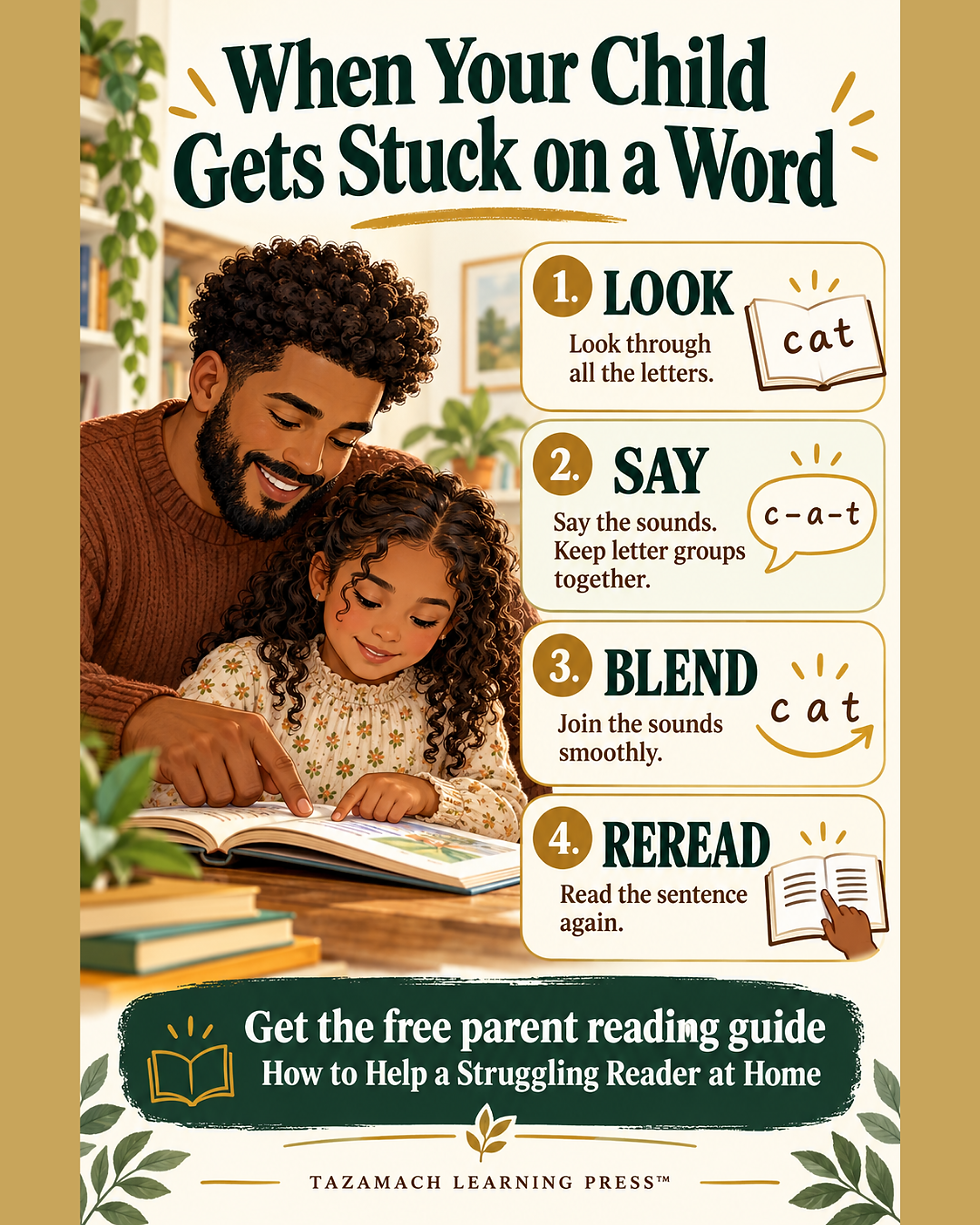
When your child gets stuck, try this simple sequence:
Look: Point to the word and look through all its letters.
Say: Help your child say the sounds. Keep familiar letter groups together—for example, sh represents one sound.
Blend: Join the sounds smoothly to read the word.
Reread: Read the sentence again and talk about its meaning.
If the word contains a spelling pattern your child has not learned, supply the word, briefly explain it, and continue. Every unfamiliar word does not need to become a lengthy lesson.
Pictures can help you discuss the story, while the letters provide the information needed to decode the word.
Keep practice short and purposeful
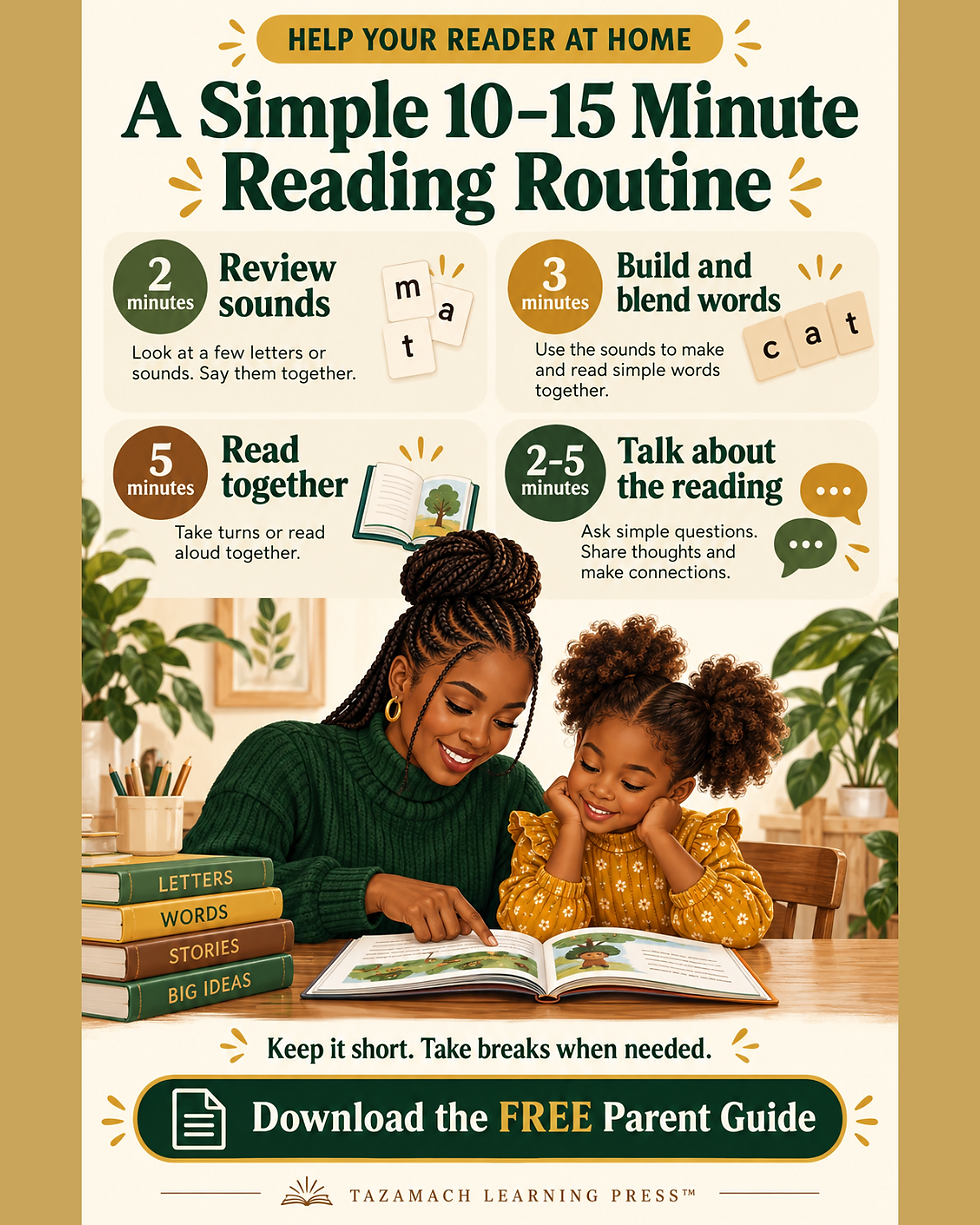
A predictable routine can make it easier to get started. The guide includes a flexible 10–15 minute reading routine:
2 minutes: Review a few familiar letter sounds or spelling patterns.
3 minutes: Build and blend words using those patterns.
5 minutes: Read a short text that matches the skills your child has learned.
2–5 minutes: Talk about the reading and acknowledge a specific success.
Adjust the timing to your child’s needs. If frustration grows, pause or shorten the session.
You can also read aloud to your child at another time. This gives you space to enjoy interesting stories and conversations while keeping decoding practice manageable.
Encourage the effort you can see
Specific encouragement tells your child what they did well.
Try saying:
“You looked carefully at that letter group.”
“You blended the sounds and read the word.”
“That was tricky. Let’s try it together.”
Avoid comparing your child with siblings or other readers. Focus on the next skill they are learning and the progress you notice.
Make room for understanding
Reading practice should include a conversation about meaning. After a short passage, ask one or two questions:
“What happened first?”
“Who or what was this about?”
“What did you learn?”
“Which words helped you know?”
If reading the words takes most of your child’s effort, read the passage aloud and discuss it together. You can practise decoding separately with an easier text.
Notice progress—and ask for support when needed
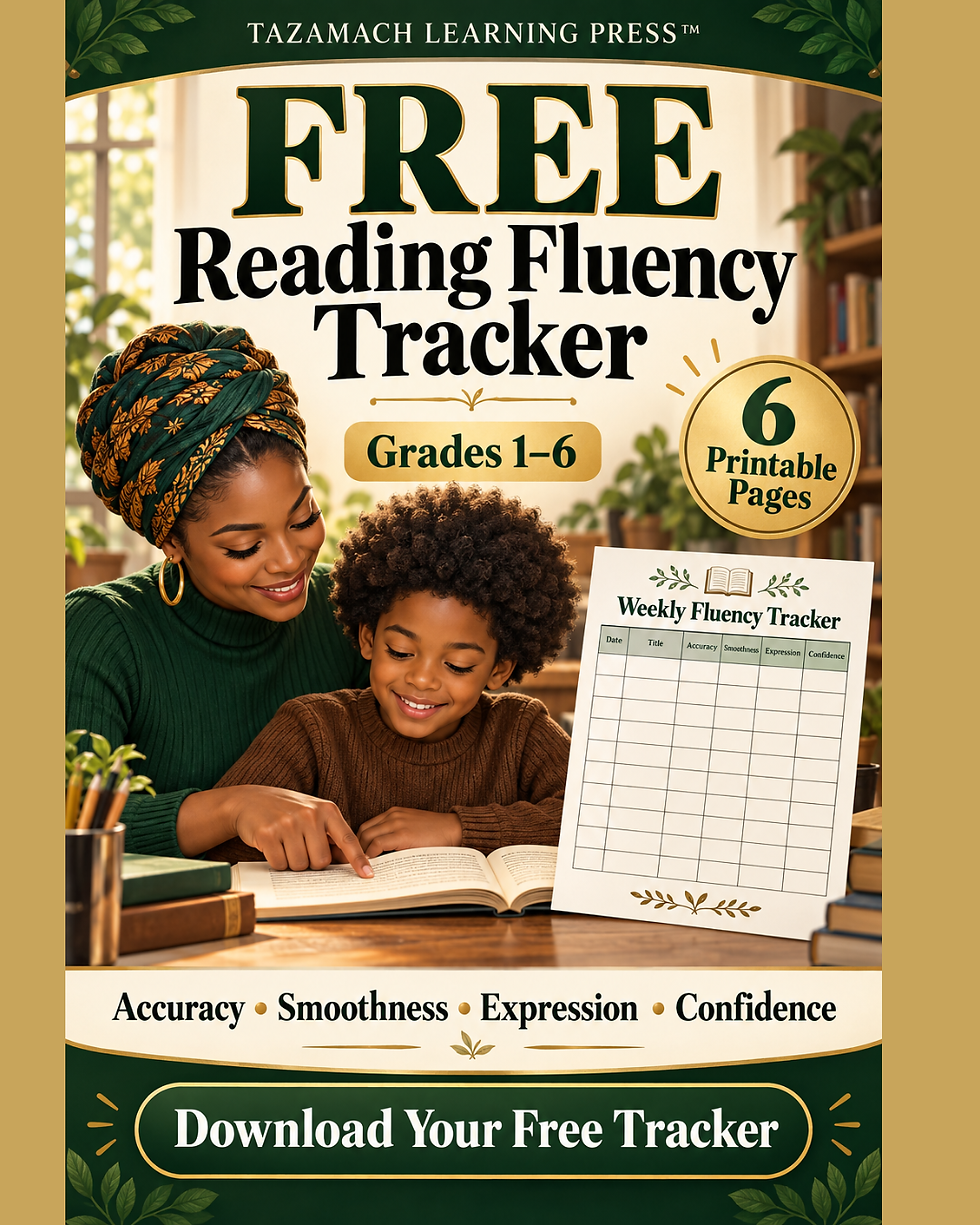
Our guide includes a simple tracker where you can record the skill practised, what became easier, and the next step.
Progress might look like remembering a sound more consistently, blending a word with less help, or explaining a sentence more clearly.
If reading remains difficult despite clear instruction and regular practice, or causes ongoing distress, speak with your child’s teacher or a qualified reading specialist. Ask which skills need attention, what to practise at home, and whether a reading assessment would help.
Download your free parent guide
How to Help a Struggling Reader at Home brings these steps together in six easy-to-follow pages. It includes a word-help routine, daily practice plan, encouraging phrases, comprehension questions, and a printable progress tracker.
Download your free guide from Tazamach Learning Press™ and choose one small step to try with your reader today.
Thawadah—thank you for supporting your child’s learning.

![[Free Download] Make Reading Part of Your Family’s Routine: Free Printable Reading Log](https://static.wixstatic.com/media/bd13de_2a1cf976a3c6414d95210d9b5ecc4cb2~mv2.png/v1/fill/w_980,h_1225,al_c,q_90,usm_0.66_1.00_0.01,enc_avif,quality_auto/bd13de_2a1cf976a3c6414d95210d9b5ecc4cb2~mv2.png)
Comments